
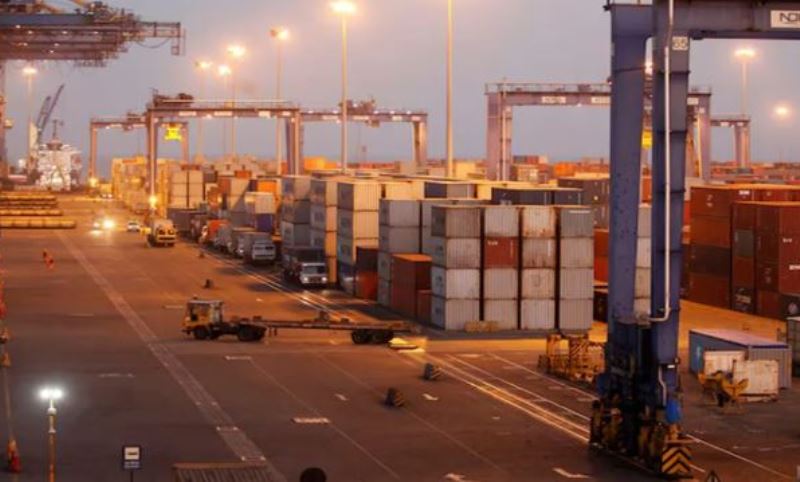
India’s container trade demonstrated remarkable resilience during the first quarter of FY2026-27, with container volumes continuing to grow despite heightened geopolitical tensions in West Asia and concerns over disruptions to shipping through the Strait of Hormuz.
Container traffic at India’s 12 major ports increased by 9% year-on-year during the April-June quarter, highlighting the strength of the country’s containerised trade and the ability of the maritime sector to withstand global uncertainties.
Leading the growth, Adani Ports and Special Economic Zone (APSEZ) handled 138.1 million metric tonnes (MMT) of cargo during the quarter, registering a 15% year-on-year increase. The performance was driven by an 18% growth in container volumes and a 12% rise in liquid cargo.
In June alone, APSEZ handled 46.8 MMT of cargo, up 13% from the corresponding month last year, supported by an 18% increase in container traffic and 11% growth in liquid cargo.
Gujarat Pipavav Port also reported positive container performance, with throughput increasing 2.4% to 168,000 TEUs during the quarter, compared with 164,000 TEUs in the same period last year.
However, the port witnessed declines in other cargo segments. Dry bulk cargo fell to 0.52 million tonnes from 0.55 million tonnes, while liquid cargo dropped sharply to 0.22 million tonnes from 0.41 million tonnes.
The port’s roll-on/roll-off (RoRo) business emerged as a key growth driver, with vehicle handling rising significantly to 65,000 units, compared to 42,000 units in the corresponding quarter of the previous year.
Despite the healthy growth in container throughput, rail-linked logistics operations weakened. APSEZ’s rail container volumes declined 19% year-on-year to 145,310 TEUs during the quarter.
Similarly, Gujarat Pipavav Port reported a decline in rail connectivity, with container trains handled falling to 346 from 447 a year earlier, while rail-borne container volumes dropped to 88,000 TEUs from 99,000 TEUs.
The sustained growth in container cargo despite geopolitical uncertainties underscores the resilience of India’s port sector and continued demand for containerised trade, even as shipping companies closely monitor developments in the Strait of Hormuz, one of the world’s most critical maritime trade routes.