
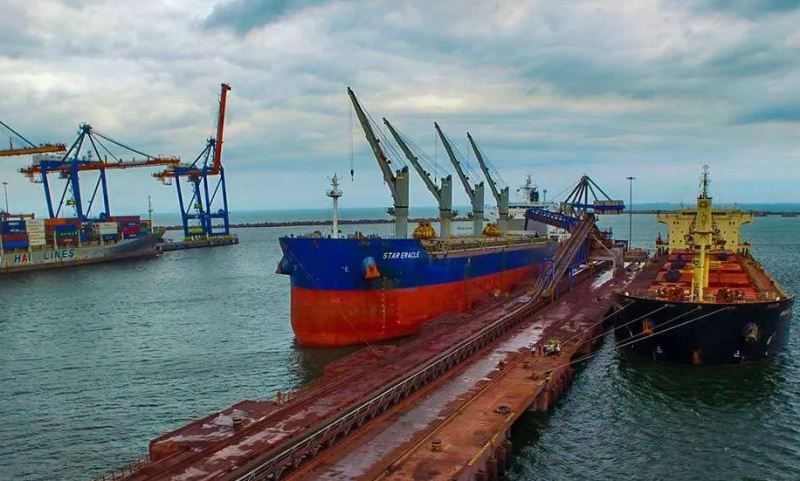
Essar Ports has outlined its growth strategy and views on regulatory, financial and operational developments shaping India’s port sector, with senior leadership highlighting the company’s ambition to scale operations and strengthen competitiveness.
Speaking on evolving industry dynamics, Mr. Anshumali Dwivedi, CFO & Head of Strategy, Essar Ports, said the company has a strong track record of developing world-class port assets across both the east and west coasts of India. He noted that Essar Ports has been a pioneer in attracting foreign direct investment into the Indian ports sector and is now focused on restoring scale, with a long-term target of achieving 5% of India’s total port capacity.
Mr. Dwivedi emphasised the positive impact of regulatory reforms, particularly the removal of the Tariff Authority for Major Ports (TAMP) regime and the transition of major port trusts into Major Port Authorities. These changes, he said, have improved pricing flexibility and operational autonomy, enhancing overall sector competitiveness. At the same time, he cautioned that aggressive and, in some cases, unsustainable bidding in multi-stage concession processes could undermine project viability, delay financial closures and strain industry resources.
On operations, he stressed that future-ready ports must be both smart and sustainable. Automation, mechanisation and digital integration are no longer optional but are critical to profitability in a capital-intensive industry. Improved safety, lower operating costs and better asset utilisation directly strengthen EBITDA, supporting debt servicing and investor confidence.
He highlighted Essar Ports’ initiatives such as fully mechanised, covered conveyor-based coal terminals, advanced automated liquid terminals and EV-led logistics solutions as examples of how environmental responsibility and operational performance can progress together.
Commenting on the Union Budget, Mr. Dwivedi said the continued policy focus on inland waterways, shipbuilding and coastal shipping is encouraging and essential for expanding cargo movement, improving multimodal connectivity and building a resilient, sustainable maritime ecosystem. He added that timely implementation of these measures would be key to unlocking long-term capital and accelerating sectoral growth.
The discussion underscored a broader industry shift towards regulatory maturity, technological advancement and sustainability-driven competitiveness, as India’s port sector enters its next phase of development.