
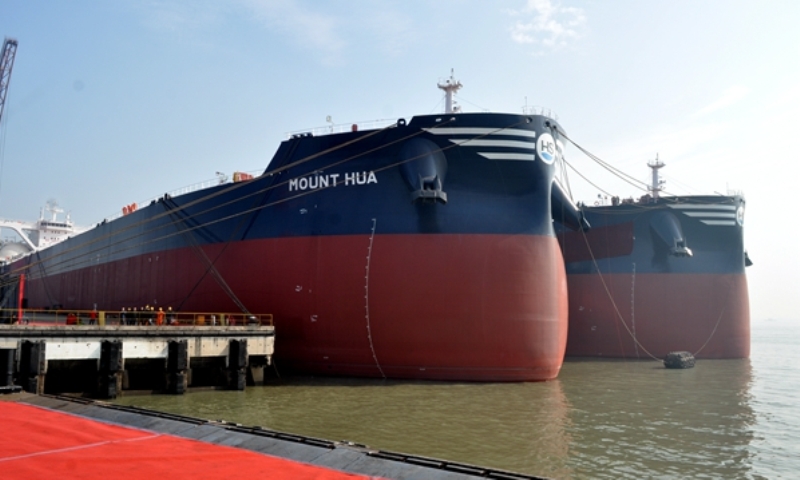
Himalaya Shipping Ltd. has secured a premium charter agreement for one of its vessels, with earnings linked to a major market freight index, strengthening the company’s revenue outlook amid firm demand in the dry bulk shipping sector.
Under the new arrangement, the charter rate will be tied to a recognised freight benchmark, allowing the vessel’s earnings to move in line with prevailing market conditions while providing an additional premium above the reference index. Such index-linked structures are increasingly used in the shipping industry to balance earnings stability with exposure to freight market upside.
The company said the agreement reflects strong demand for modern, fuel-efficient bulk carriers as charterers seek reliable tonnage to move commodities across global trade routes. Index-linked charters also enable shipowners to benefit when freight markets strengthen while maintaining predictable revenue streams.
Himalaya Shipping Ltd. operates a fleet of Newcastlemax dry bulk carriers, which are primarily used to transport large volumes of iron ore and other bulk commodities between major mining regions and steel-producing markets.
Shipping analysts note that the latest charter highlights improving market sentiment in the dry bulk sector, driven by steady demand for raw materials and tightening vessel availability in certain segments.
The premium fixture is expected to contribute positively to the company’s earnings profile, while also providing exposure to fluctuations in freight markets through the index-linked structure.