
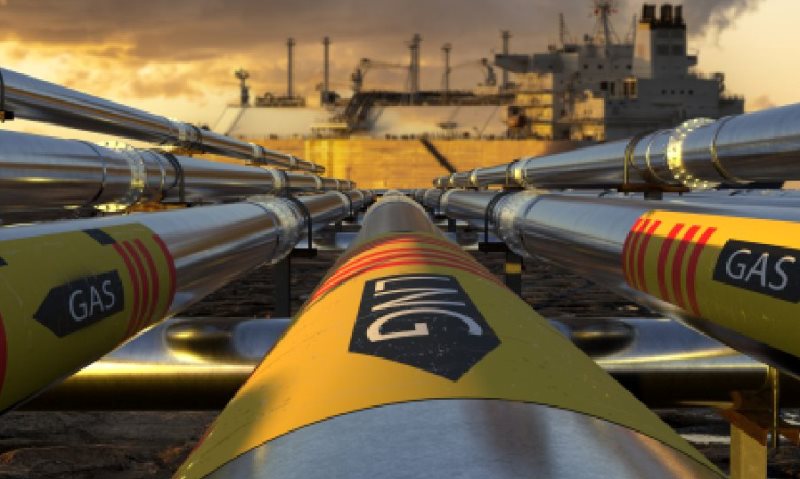
India’s demand for spot cargoes of liquefied natural gas (LNG) is expected to reduce as importers shift towards medium- and long-term contracts over the next two years, following multiple deals that come into effect as early as next month, S&P Global Commodity Insights said on Thursday. However, the higher reliance on term contracts could be poorly timed, as the market expects a flush of new supply that could drive spot prices lower, leaving Indian buyers exposed to more expensive contracted LNG, it pointed out in a note.
The new supply and purchase agreement (SPA) contracts kicking in from April include a five-year deal between state-owned GAIL and QatarEnergy for one cargo per month and Bharat Petroleum Corp Ltd (BPCL)’s contract with Abu Dhabi National Oil Co (ADNOC) for at least six cargoes per year for a five-year tenure.
“These contracted volumes are cheaper than current spot LNG prices of around $13 per MMBtu and the forward curve for LNG in 2025 and 2026, but they will become more expensive for buyers when spot prices fall from 2027 onwards as more supply hits the market,” S&P said.
The pricing for the two contracts is similar, with a slope of 115-121 per cent to Henry Hub prices, with a constant of $5.6-$5.8 per metric million British thermal unit (MMBtu), Platts, part of S&P Global Commodity Insights, reported earlier.
Asian importers have historically used oil slopes, calculated as a percentage of crude oil prices, as a proxy to price LNG contracts from a time when the LNG market was nascent, and buyers were looking to substitute oil products in the downstream market.
Move towards contracts
Heavy marketing efforts by Middle East suppliers and geopolitical pressure from the US under the Trump administration are also forcing companies to sign long-term contracts, S&P said.
Last month, Petroleum and Natural Gas Minister Hardeep Singh Puri said India would have access to as much natural gas as it needs within 18 months. Ongoing strategic investment into assets abroad, alongside gas purchases, would ensure this, the minister had stated on the sidelines of the India Energy Week (IEW).
At the same event, the International Energy Agency (IEA) projected that natural gas consumption in India would grow by nearly 60 per cent to 103 billion cubic metres (bcm) annually, while gas imports would double by 2030. The global body also pointed out that the gap between contracted LNG supply and projected LNG requirements is set to widen significantly after 2028, leaving India more exposed to the volatility of the spot LNG market unless additional LNG contracts are secured in the coming years.
According to global energy data and analytics provider Wood Mackenzie, Indian LNG buyers sought to renew and sign new long-term SPAs for a total of 14.7 million metric tonnes per annum (mmtpa) in 2024. Spot LNG imports almost doubled to more than 110 cargoes during the year to bridge the gap between rising demand and shrinking production. While contractual LNG volume stood at around 22 mmtpa in 2024, it is expected to surpass 27 mmtpa in 2026 with the addition of the SPAs signed in 2024, the company said last month.