
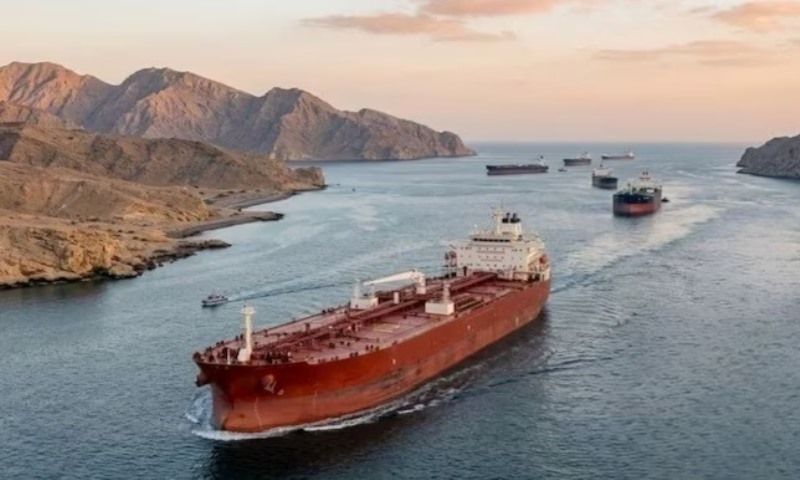
Traffic through the strategically vital Strait of Hormuz rebounded last week after falling to wartime lows earlier this month, according to maritime analytics firm Kpler.
Data showed that 55 commodity vessels transited the waterway between May 11 and 17, a sharp recovery from just 19 vessels recorded the previous week — the lowest weekly volume since the outbreak of the current Middle East conflict following US-Israeli strikes on Iran on February 28.
Iranian state media said the Islamic Revolutionary Guard Corps had eased restrictions on shipping movements, with more than 30 vessels reportedly permitted to pass through the strait last week.
Despite the rebound, vessel traffic remains broadly aligned with wartime averages. Since March 1, Kpler has tracked 663 commodity vessels crossing the strait, averaging about 55 ships per week.
Tankers Dominate Crossings
Roughly half of the vessels that crossed last week were liquid cargo carriers, including three very large crude carriers (VLCCs) reportedly headed to China, Oman and Japan.
The weekly traffic also included 15 dry bulk vessels and 16 liquefied petroleum gas (LPG) tankers. However, only one liquefied natural gas (LNG) tanker carrying Qatari gas to Pakistan transited the strait during the week, highlighting the continued disruption to LNG trade routes.
Since the start of the conflict, only eight LNG tankers have crossed the strait, a significant decline for a waterway that typically handles around one-fifth of global oil and LNG shipments during peacetime.
Iran Tightens Oversight
Tehran has repeatedly warned that shipping activity through the strait would not return to pre-war levels. On Monday, Iranian authorities announced the formation of a new body to oversee vessel transit and levy charges on ships using the passage.
The move adds another layer of uncertainty for global shipping markets already grappling with geopolitical instability in the region.
Chinese Shipping Activity Remains Limited
Iranian officials stated last week that Chinese-linked vessels had been allowed to transit the strait after a slowdown in crossings earlier this month.
Kpler data showed only three commodity vessels linked to China through ownership, flag or cargo crossed the strait last week, along with two Hong Kong-flagged ships headed to Oman and the United Arab Emirates.
Iran has indicated that countries complying with US sanctions could face restrictions while transiting the strait, making shipping access increasingly dependent on geopolitical alignments.
Since the conflict began, China and India have remained among the most frequently reported non-Gulf destinations for commodity cargoes moving through the corridor.
The future of shipping through the Strait of Hormuz continues to be closely tied to stalled negotiations between Iran and the United States, with no diplomatic breakthrough yet achieved.