
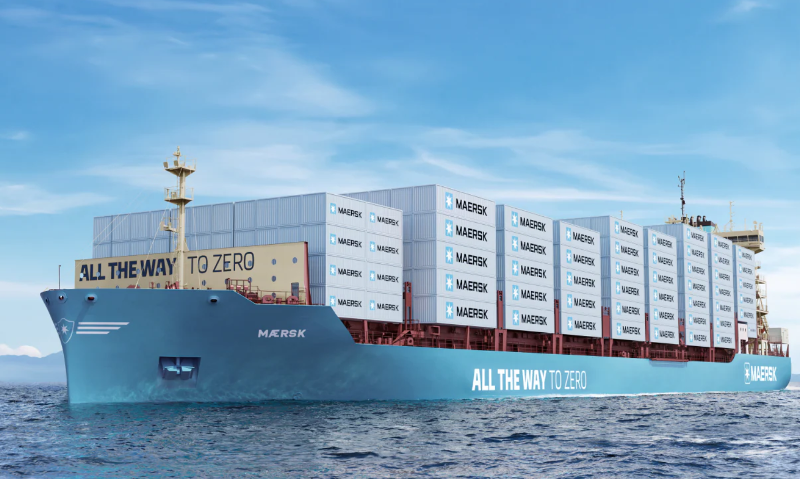
Maersk has taken delivery of its second 9,000-TEU methanol dual-fuel container vessel from Yangzijiang Shipbuilding, marking another step in the carrier’s transition toward lower-emission shipping and alternative fuel adoption.
The new vessel is part of Maersk’s broader fleet renewal strategy aimed at reducing carbon intensity across its global liner network. The ship is capable of operating on methanol as well as conventional marine fuels, allowing greater flexibility while supporting the company’s decarbonisation roadmap.
Industry sources said the 9,000-TEU segment is increasingly being viewed as a key mid-sized capacity class for intra-Asia and long-haul trade routes, where carriers are balancing operational efficiency with environmental compliance. Methanol dual-fuel ships are gaining traction as shipping lines look to meet tightening emissions regulations and long-term net-zero targets.
Maersk has been one of the early movers in alternative fuels, placing multiple orders for methanol-powered vessels as part of its strategy to scale up green shipping operations. Analysts said the latest delivery reflects continued investment in fleet modernisation and fuel transition technologies.
Yangzijiang Shipbuilding, one of China’s leading private shipyards, continues to secure a strong pipeline of container vessel orders, particularly in the eco-friendly ship segment. Industry observers noted that Chinese yards are playing a central role in delivering next-generation container ships amid rising demand for greener maritime transport solutions.
The development comes as global container shipping lines accelerate investments in alternative fuel technologies, including methanol, LNG and ammonia-ready designs, to comply with evolving environmental standards and customer sustainability expectations.