
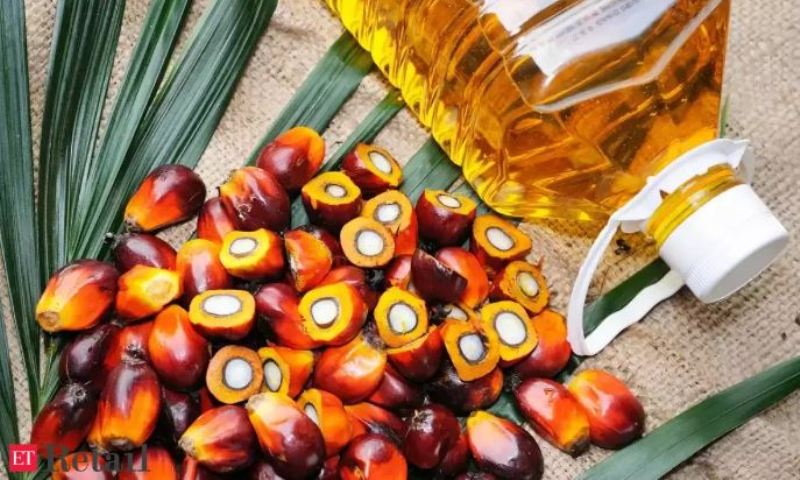
Malaysia sees rising demand from India for its germinated oil palm seeds as New Delhi accelerates efforts to expand domestic palm oil production under its National Mission on Edible Oils–Oil Palm (NMEO-OP), the Malaysian Palm Oil Board (MPOB) said.
India imported 3.03 million tonne of palm oil from Malaysia in 2024, accounting for 17.9 per cent of Malaysia’s total palm oil exports, making it the largest market for the commodity. The country is now also the top destination for Malaysian oil palm seeds, a development MPOB Director General Ahmad Parveez Ghulam Kadir said, which reflects “confidence in the quality of our seeds and our longstanding partnership with India.”
New Delhi aims to increase palm oil cultivation to 1 million hectares by 2025–26 and produce nearly 2.8 million tonne of crude palm oil domestically by 2029–30. As of mid-2025, about 370,000 hectares are already under cultivation, with northeastern states and island territories emerging as key growing regions.
The surge in demand for Malaysian seeds comes as Malaysia’s overall palm oil exports to India moderate following a tariff cut on crude palm oil imports by New Delhi. Despite this, Malaysia is working to strengthen its presence in India’s food manufacturing and hospitality sectors, where demand for palm oil remains robust.
To support this, Malaysia is promoting sustainably certified palm oil under the Malaysian Sustainable Palm Oil (MSPO) standard and enhancing productivity through research and development. Kadir told PTI that the MPOB has developed high-yield palm varieties through selective breeding capable of producing over 30 tonne of fresh fruit bunches (FFB) per hectare annually. This is nearly double Malaysia’s national average yield of 15.47 to 16.73 tonne per hectare recorded between 2020 and 2023.
These new varieties also grow more slowly in height, extending their economic lifespan beyond the typical 25 years to over 30 years and making harvesting easier. Research is also underway on climate-resilient strains with improved drought tolerance, although no such varieties have yet been released commercially, Kadir added.
The developments underline how Malaysia’s seed exports and technology are becoming integral to India’s efforts to reduce reliance on imported edible oils, even as bilateral trade ties adapt to shifting tariff regimes.