
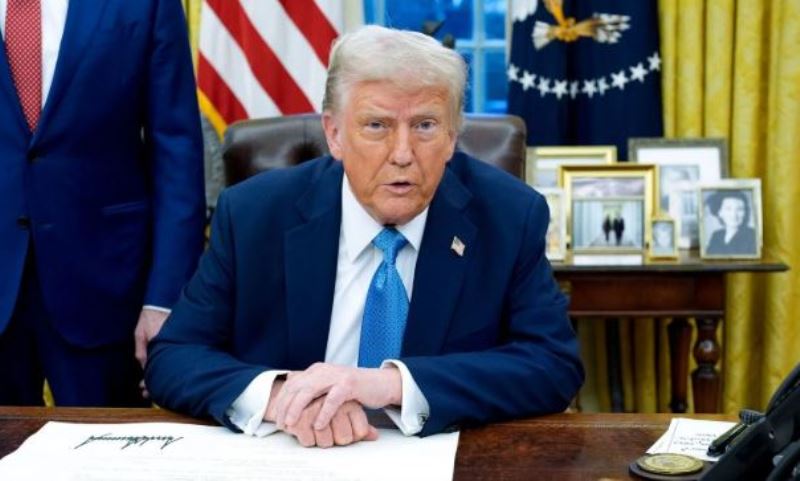
Donald Trump has indicated to his aides that he is open to winding down the ongoing conflict with Iran even if the Strait of Hormuz remains largely closed, according to a report by The Wall Street Journal citing administration officials.
The stance follows internal assessments that efforts to fully reopen the critical maritime corridor could prolong military engagement beyond the administration’s targeted four- to six-week timeframe. Instead, Washington is prioritising operations aimed at weakening Iran’s naval capabilities and missile stockpiles before scaling back its military presence.
Diplomatic Push on Shipping Lanes
Alongside military measures, the United States is expected to ramp up diplomatic pressure on Tehran to restore normal shipping flows through the strait. Should these efforts fall short, Washington may look to European and Gulf allies to take a leading role in reopening the route.
Officials believe that a calibrated US drawdown could help ease regional tensions and improve prospects for resuming maritime traffic through the waterway, a vital artery for global energy trade.
Global Energy and Trade at Risk
Disruptions in the Strait of Hormuz have already driven oil prices higher, raising concerns for major importers such as India and China, while fuelling broader fears over global economic growth.
Trump’s public messaging has been inconsistent in recent weeks. At times, he has warned of potential strikes on civilian energy infrastructure if shipping is not restored within a set deadline. On other occasions, he has downplayed the strait’s importance for the US, suggesting that maintaining open passage should fall to other nations.
For India, the stakes remain particularly high. Roughly 50% of its crude oil, 60% of LPG, and 70% of LNG imports transit through the Hormuz corridor, leaving it highly exposed to prolonged disruption. Any sustained blockage could result in elevated prices, supply constraints, and increased uncertainty in energy availability.
A note from QuantEco Research warned that escalating tensions in West Asia are once again straining global supply chains in the post-pandemic period, with the growing “weaponisation” of key maritime trade routes posing long-term risks to international commerce.
Data from Bloomberg indicates a sharp drop in vessel traffic through the strait, with only around six ships transiting daily in March. Nearly 80% of outbound oil tankers are reportedly linked to Iran or its allies.
In addition, increased electronic interference has disrupted ship-tracking systems, while most vessels are now navigating along Iran-approved routes near its coastline, often after negotiating safe passage—further underscoring the fragile state of one of the world’s most critical shipping lanes.