
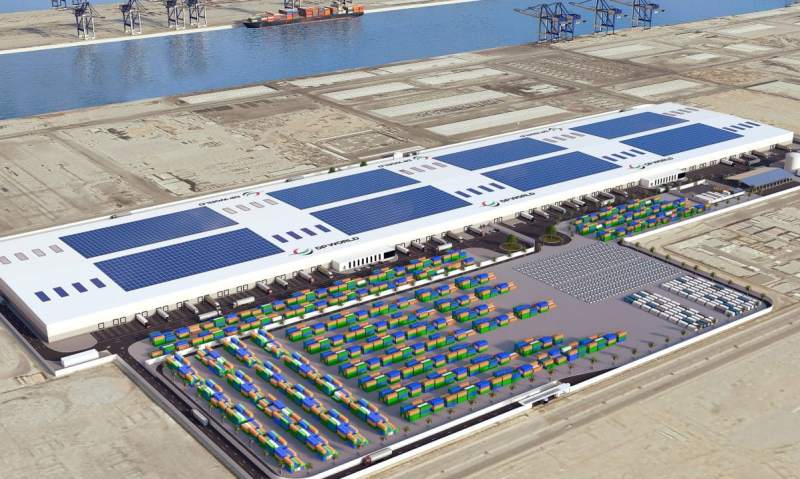
The Uttar Pradesh government has unveiled the Multi-Modal Logistics Park Policy 2024, aiming to position the state as a top-tier logistics hub. This initiative will significantly enhance infrastructure, supply chain efficiency, and the state’s global connectivity. Uttar Pradesh is set to emerge as India’s largest logistics hub, thanks to a robust plan to establish a state-ofthe-art multi-modal logistics park. With a minimum investment of Rs 1,000 crore, the project aims to streamline supply chains, improve trade efficiency, and boost economic growth in the state.
Major Highlights of the Policy
The Uttar Pradesh Multi-Modal Logistics Park Policy 2024 sets clear investment criteria to attract large-scale and impactful projects. To qualify for the benefits, projects must have a minimum investment of Rs 1,000 crore and ensure that only significant ventures contributing to the state’s economic growth are considered.
Eligible investors are those companies which are listed in the prestigious Fortune Global 500 or Fortune India 500, reflecting a preference for established businesses with proven expertise. Foreign investors, on the other hand, can qualify by committing a foreign direct investment (FDI) of at least Rs 100 crore in the state, encouraging international companies
to participate and enhance global trade connections.
To make these projects financially attractive, the policy offers several lucrative incentives. Investors are entitled to a 30 per cent upfront land subsidy, applicable to land allocated by state industrial authorities or other government institutions.
This significantly reduces the initial cost of setting up a project. Furthermore, all development fees, usually charged for setting up infrastructure and utilities, are waived, with the respective development authorities bearing these costs. In addition, there is a complete exemption from stamp duty on land leased for approved projects, eliminating a substantial expense in land transactions and reducing financial burdens for businesses.
The policy also prioritizes ease of doing business by introducing a single-window clearance system to streamline the approval process. This centralized system allows investors to submit all necessary applications and documents in one place, avoiding delays caused by navigating through multiple departments. The simplified process reduces bureaucratic
hurdles, ensures quicker approvals, and enhances transparency, creating a business-friendly environment that encourages both domestic and international investments. Through these measures, Uttar Pradesh aims to establish itself as a leading hub for logistics and trade in India.
India’s logistics industry, valued at $215 billion in 2020, is expected to grow to $360 billion by 2032. With its strategic location and investor-friendly policies, Uttar Pradesh is positioning itself to lead this expansion. The multi-modal logistics park is expected to set new benchmarks for similar projects across India.