
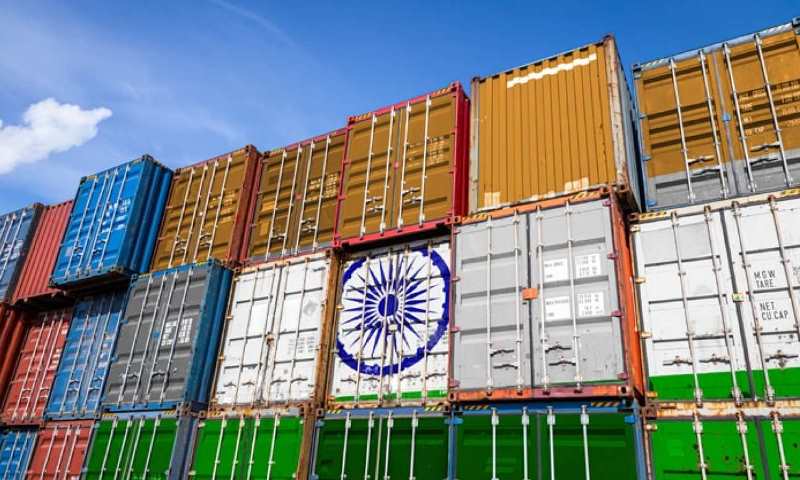
India’s merchandise exports touched a record $441.78 billion in FY26, reflecting the government’s push to diversify markets and promote high-value manufacturing. Growth in shipments to Northeast Asia, Africa, and Latin America highlighted India’s efforts to reduce dependence on traditional markets amid continuing global trade uncertainty.
North America remained India’s largest export destination, accounting for $97.7 billion or 22.1% of total merchandise exports, though growth was modest at 1.3%. Northeast Asia emerged as the fastest-growing region, with exports rising 21.6% to $41.6 billion, driven by stronger demand for electronics, engineering products, and chemicals. Exports to East Africa increased 13.7% to $12.6 billion, while shipments to North Africa grew 14.8% to $8 billion.
The broader geographical spread is seen as an attempt to build resilience against disruptions in global trade routes and fluctuating demand in advanced economies. Exporters also expanded into 1,821 new product categories during FY26, signalling a gradual shift toward technology-intensive and higher-value manufacturing sectors.
Engineering and industrial products played a key role in this transition. Exports of ships, boats, and floating structures expanded into 19 new markets, while products such as nuclear reactors, industrial boilers, and telecom instruments also recorded growth. The diversification aligns with India’s strategy to strengthen advanced manufacturing and reduce reliance on commodity-based exports.
However, India’s overall merchandise export growth remained subdued at 0.93%, lagging behind several competing economies. Vietnam recorded export growth of 17% in 2025, China’s exports surged 21.8% in early 2026, and Mexico posted a 7.6% increase in outbound shipments. Analysts say this suggests India is still integrating more slowly into global value chains and faces strong competition in manufacturing exports.
At the same time, India’s merchandise trade deficit widened sharply to $333 billion in FY26, with April 2026 alone recording a deficit of $28.38 billion. Electronics remained a major concern, as the sector posted a record monthly trade deficit of $7.6 billion, reflecting continued dependence on imported components and finished products despite domestic manufacturing initiatives.
Global supply chain disruptions linked to tensions in West Asia, rising freight costs, and shipping route uncertainties also added pressure on import bills and exporter margins. Infrastructure bottlenecks and logistics costs, estimated at nearly 7.97% of GDP, continue to affect India’s export competitiveness.
Analysts note that while India’s focus on high-value manufacturing is gaining traction, long-term success will depend on improving domestic supplier ecosystems and increasing local value addition to reduce dependence on imported intermediate goods.
Looking ahead, the government is targeting $1 trillion in merchandise exports by 2030 and is pursuing new Free Trade Agreements with countries including the UK, Oman, and New Zealand to strengthen market access, particularly for labour-intensive industries. Industry observers believe the effectiveness of India’s diversification strategy will ultimately depend on faster manufacturing expansion, lower logistics costs, and deeper integration into global supply chains.