
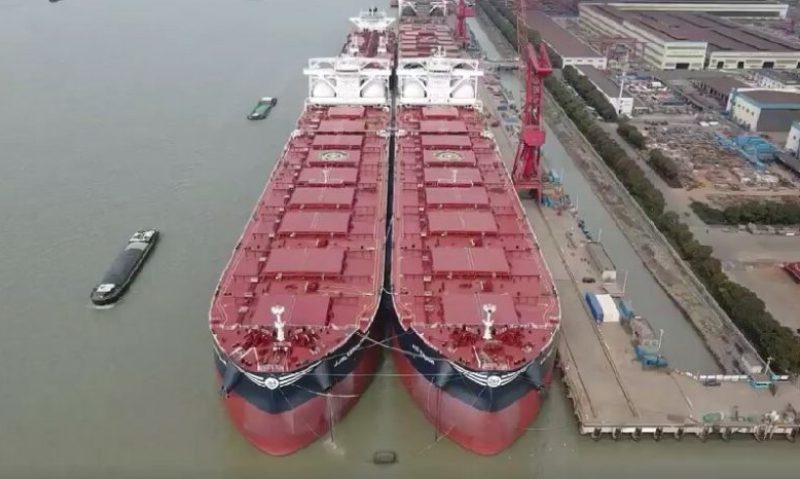
The two bulk carriers, with a capacity of 55,000 to 66,000 DWT (deadweight tonnage) each, are being procured at a cost of around Tk800 crore.
Talking to the Daily Sun, the state-owned entity’s Managing Director Commodore Mahmudul Malek said that they have already evaluated shipyards and vessels from 25 global builders and sellers, including firms in China, Japan and the Philippines.
A development project proposal (DPP) has already been submitted for procurement of the two readymade bulk carriers and the acquisition process will be finalised upon approval of the relevant government authorities.
“If everything goes as planned, the ships will join the BSC fleet by July and we expect them to begin operations within 10 to 15 days of their arrival,” he added.
According to sources at BSC, the corporation posted a record net profit of Tk249.69 crore in the fiscal year 2023-24, the highest in its history. The new vessels are being purchased using those earnings.
Globally, ships are typically purchased through three processes – by placing an order for building a new vessel (which may take 2-3 years), buying a ship that is already under-construction, or acquiring second-hand vessels.
“We’ve already visited several yards where the ships are 40% to 60% completed. However, we are committed to making thorough inspections and due diligence before finalising any procurement. I visited Yangzijiang’s shipbuilding yard in Shanghai as part of this process,” said Commodore Malek.
“Our technical director recently visited three more yards. In total, we aim to inspect 14 ships within the next month, from which we expect to select two for us,” Malek added.
To regain its previous glory in the maritime sector, the national flag-carrier BSC earlier revealed its plan to add 22 more vessels to its fleet in the next five years.
The fleet size will help the state-run organisation emerge as the top domestic player in the maritime industry.
Earlier, the BSC alone operated a robust fleet of 44 vessels for goods transportation globally. But, it had been witnessing significant setbacks as the number of its vessels dropped to only five recently, thanks to decades of mismanagement, lack of proper planning, operation efficiency and accountability.
Currently, Bangladesh has 103 ocean-going vessels carrying the national flag, with both government and private entities actively investing in fleet expansion, driven by the sector’s potential.
Established on 5 February in 1972, just a year after the country’s independence, BSC gradually got its fleet size expanded to 44.
Currently, the BSC fleet consists of five ships – bulk carriers MV Banglar Joyjatra and MV Banglar Orjon, and oil-chemical tankers MT Banglar Agrojatra, MT Banglar Agrodut and MT Banglar Agrogoti.