
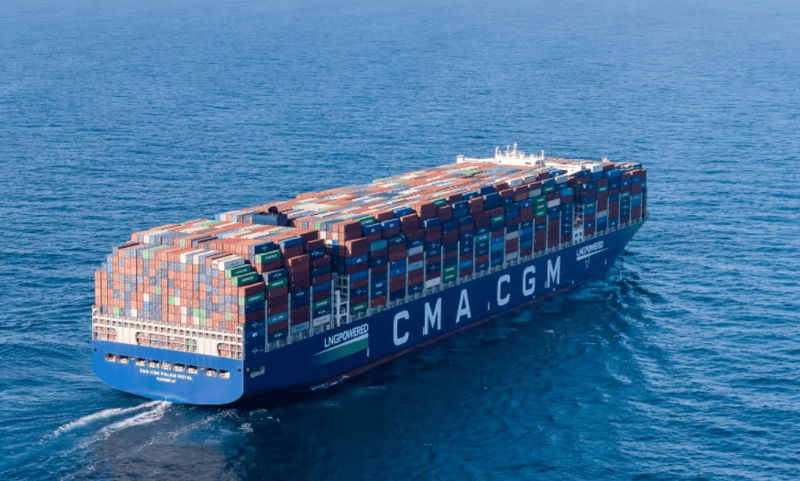
CMA CGM is looking into the possibility of building mid-size vessels in the US, the Trump administration having promised tax incentives in support of such activity.
“Today, there are shipyards producing small vessels for American operators. We might be interested in building larger models – not 24,000 containers, but around 6,000. We’re in discussions with several yards to see how long it would take and at what cost. From there, we’ll see whether we go ahead or not. What’s interesting is to have this possibility.”
He said it was his understanding that President Trump wanted to help shipping companies that are ready invest in the United States, for example, to build ships locally, or operate ships under the American flag.
“Today, shipbuilding in the United States is extremely expensive, especially if you want to operate under the local flag. On top of that, there aren’t enough crew personnel to man ships. So I’ve raised these issues with President Trump and we’ll be discussing them again with his administration to try and find solutions.”
CMA CGM could also provide crew training, via its Tangram training centre, which could set up links with training bodies in the US, Mr Saade added.
Turning to the port taxes that Trump has threatened to impose on shipping lines with Chinese vessels in their fleets, Mr Saade said CMA CGM was following the matter very closely.
“We’ll adapt to whatever decisions are made by the Trump administration. The World Shipping Council, the international association of shipowners, is in charge of discussing such issues with the authorities. We’re not here to comment on rules decided by sovereign countries. We haven’t had any discussions with President Trump on this subject.”
Asked whether these new taxes would completely wipe out CMA CGM’s profits on US routes, Mr Saade replied: “It’s too early to say, but the amounts involved are considerable. It would be a major issue for us if these regulations were implemented. An announcement has been made, but we don’t know if it will go through. As a businessman, I’m in favour of free enterprise and free trade, so that we can develop CMA CGM in all countries.”
CMA CGM generates around 25% of its turnover in the US.
He continued: “I want to be in a market where you can do business in any country. Putting up barriers in some of them, particularly the United States, can be problematic for shipping companies. We can make long-term commitments when the conditions under which we operate are also long-term.”
Quizzed on whether the threat of a trade war initiated by Donald Trump would reduce global maritime traffic, Mr Saade underlined that he was not in favour of customs barriers as there was nothing worse for free trade than imposing tariffs between different countries.
“However, having said that, if the decisions are made, we’ll adapt. But I believe that trade between nations is the best antidote to conflict, and has been a key driver of global growth and consumer purchasing power.”
Turning to the purchase of the Hutchison terminals by BlackRock and MSC and the prospect of this changing the ‘balance of power’ between the major shipping lines, Mr Saade explained that today, given the size of ships and the number of vessels deployed, shipping lines are looking to secure transshipment hubs or terminals to be able to operate their vessels.
“The more ships there are, the more space is needed to unload them, and the more investment is required. It’s a strategic move that the MSC group, in association with BlackRock, has set in motion. We weren’t interested in all of Hutchison’s terminals, but in two of them in Panama, as we already have substantial infrastructures in Santos in Brazil, Los Angeles, Europe, the Middle East and North Africa. In the end, Hutchison decided to sell its entire terminal portfolio, and not just the two we had bid for.”