
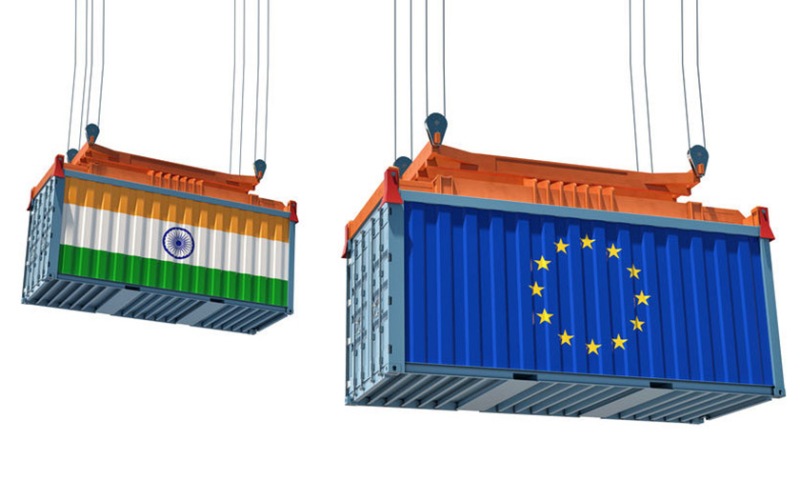
A visiting European Union delegation will meet Commerce and Industry Minister Piyush Goyal on Monday to assess the progress of negotiations on the proposed India-EU Free Trade Agreement (FTA), with both sides aiming to conclude the long-pending pact by the end of this year, an official told PTI.
The high-level EU team, led by Sabine Weyand, Director-General for Trade, is currently in New Delhi for a fresh round of discussions to iron out outstanding issues across key sectors. Negotiators are working to bridge gaps in sensitive areas such as steel, the EU’s proposed carbon border tax, automobiles, medical devices, and various non-tariff barriers.
“The EU team will meet the minister on Monday,” the official said, acknowledging that while progress has been made, certain critical differences remain.
India and the 27-nation EU bloc restarted negotiations in June 2022 for a comprehensive FTA, an investment protection pact, and a separate agreement on geographical indications, nearly a decade after talks were suspended in 2013 due to disagreements over market access.
The European Union remains India’s largest trading partner in goods, with bilateral trade valued at $136.53 billion in 2024-25. Indian exports stood at $75.85 billion, while imports from the EU totalled $60.68 billion. The bloc accounts for about 17% of India’s total exports, while India makes up around 9% of the EU’s global shipments.
As part of the negotiations, the EU is seeking significant tariff reductions on automobiles, medical devices, wine, spirits, and various agricultural products, along with stronger intellectual property protections. India, meanwhile, aims to secure wider market access for key export sectors such as ready-made garments, pharmaceuticals, steel, petroleum products, and electrical machinery — industries expected to gain a competitive boost if the FTA is sealed.
The proposed agreement spans 23 chapters, covering trade in goods and services, investment, rules of origin, customs and trade facilitation, government procurement, dispute settlement, intellectual property rights, and geographical indications.
With the year-end deadline approaching, both sides are intensifying efforts to resolve pending issues and move closer to one of India’s most ambitious trade deals in recent years.