
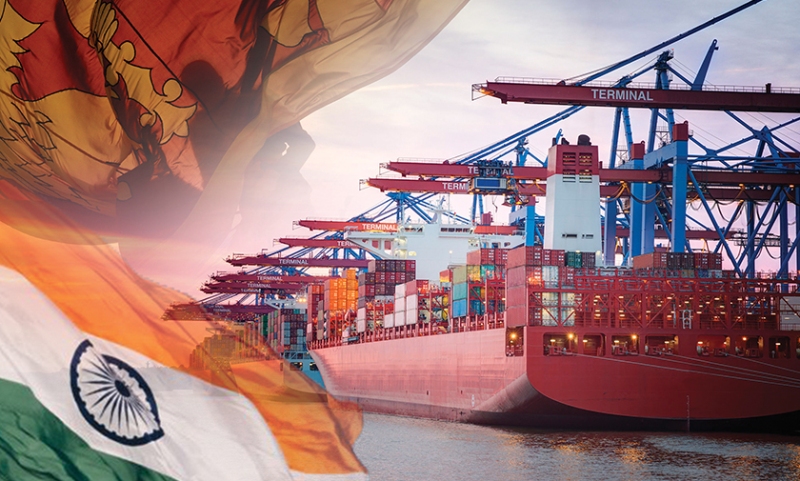
India is awaiting a response from the United States on its proposal for the much-anticipated Bilateral Trade Agreement (BTA) and does not see the need for another round of negotiations, according to government sources familiar with the matter.
“India has kept in mind each sensitive sector and ensured their protection in the proposal made to the US. The talks are progressing well between both sides. India is now waiting for the US response, and another round may not be needed,” a source tracking the negotiations said.
US President Donald Trump, speaking at the swearing-in ceremony of Sergio Gor as the new US Ambassador to India at the Oval Office on Monday, said that trade talks with India had made “significant progress,” adding that both sides were “close to reaching a fair and balanced agreement.”
“We’re making a deal with India — much different from what we had. Right now, they don’t love me, but they will love us again. We’re getting a fair deal. They’re very good negotiators… I think we’re pretty close to doing a deal that is good for everybody,” President Trump said.
However, sticking points remain — notably, India’s continued purchase of Russian oil, which the US has demanded be halted. Washington alleges that such purchases indirectly fund Russia’s war in Ukraine, while New Delhi has maintained that its energy trade with Moscow does not violate any international restrictions and is essential to safeguard national energy security.
“India has made a comprehensive offer to open its markets in several sectors to boost US exports and reduce the trade imbalance. But it cannot accept a diktat on Russian oil purchases. Energy security and historical ties with Russia remain critical for India,” another source said.
In August, the US imposed a 50 per cent duty on Indian goods, including a 25 per cent penalty linked to oil imports from Russia. For the BTA to take effect, India has insisted that the oil-related penalty be completely rolled back.
“India’s competitors such as Vietnam and Bangladesh face duties of around 19–20 per cent. For India to remain competitive in the US market, the duties must be reduced and reciprocal tariffs rationalized,” the source explained.
Beyond the oil issue, agriculture and dairy have also emerged as contentious areas, with Washington seeking greater market access for US soya and corn — products that are largely genetically modified. “These are highly sensitive sectors in India. The country does not permit GM soya or corn, but the US continues to press hard for entry,” the source added.
With both nations emphasizing their commitment to strengthening trade ties, observers expect a final agreement could take shape once the US formally responds to India’s latest proposal.