
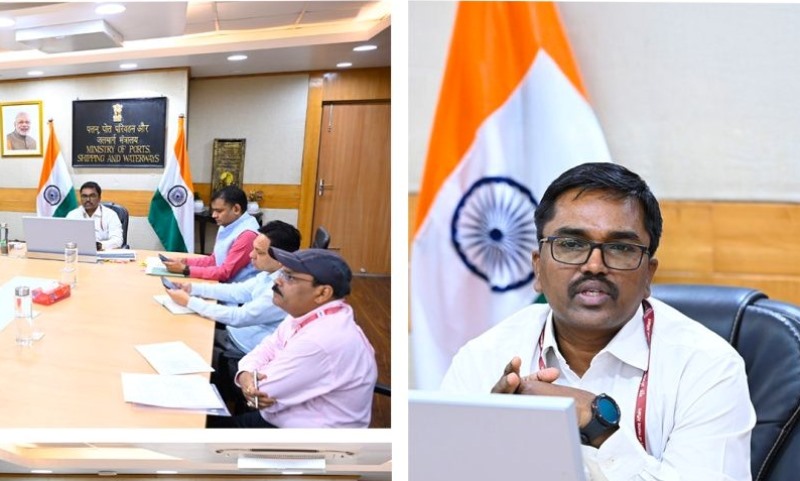
A stakeholder consultation convened by the Ministry of Ports, Shipping and Waterways has brought renewed focus to strengthening domestic manufacturing capabilities for port equipment under the government’s ‘Make in India’ initiative.
The meeting brought together terminal operators, representatives from major ports, and maritime boards to deliberate on procurement practices, assess demand trends, and evaluate the preparedness of Indian manufacturers to meet the evolving requirements of the port sector. The consultation forms part of ongoing efforts to reduce reliance on imports while enhancing self-sufficiency in critical maritime infrastructure.
Participants shared on-ground insights into procurement experiences, highlighting key challenges such as cost competitiveness, technology gaps, lifecycle maintenance considerations, and standardisation issues. Discussions also underscored the importance of aligning domestic production with global quality benchmarks to ensure reliability and efficiency in port operations.
A significant portion of the dialogue was devoted to understanding future demand for port equipment, particularly in light of India’s expanding cargo volumes and capacity augmentation plans across major and non-major ports. Stakeholders emphasized that predictable demand visibility and long-term procurement pipelines would be essential to encourage investments in domestic manufacturing.
The session further examined policy-level interventions needed to support the ecosystem. These included targeted incentives, easier access to financing, skill development, and stronger industry-academia collaboration to foster innovation in equipment design and engineering. The need for standardised specifications and certification frameworks was also highlighted to build trust among port operators.
Officials noted that developing a robust, market-aligned domestic ecosystem would not only reduce costs over time but also improve supply chain resilience and create employment opportunities. Strengthening indigenous manufacturing is expected to play a critical role in supporting India’s ambitions to become a global maritime hub.
The consultation concluded with a shared commitment among stakeholders to deepen collaboration and accelerate efforts toward building a competitive, self-reliant port equipment manufacturing base in the country.