
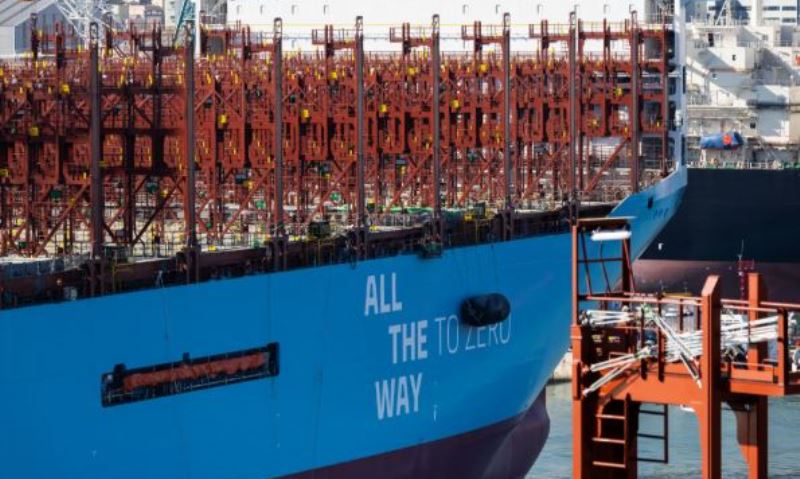
Global container shipping major A.P. Moller–Maersk has launched a large-scale retrofit programme covering around 200 vessels in its time-chartered fleet, aimed at improving fuel efficiency, enhancing cargo-carrying capacity, and reducing greenhouse gas (GHG) emissions.
The initiative, undertaken in collaboration with nearly 50 shipowners, focuses on lowering “slot cost” — the cost of transporting a container — by deploying a range of technical upgrades across vessels. These include hydrodynamic improvements such as redesigned bulbous bows, propeller upgrades, and the installation of energy-saving devices to reduce drag and optimise fuel consumption.
Maersk said its chartered fleet accounts for a significant share of its overall fuel consumption, making efficiency improvements in this segment critical to both cost optimisation and sustainability goals. The company emphasised that working closely with vessel owners allows it to implement solutions that improve operational competitiveness while cutting emissions.
The programme is already well underway, with more than 1,500 retrofit projects completed across the 200 ships, and another 1,000 projects scheduled for completion by 2027. The investment burden is being shared between Maersk and its shipowning partners.
The retrofit drive is part of Maersk’s broader decarbonisation strategy. The company is targeting a 35% reduction in Scope 1 emissions by 2030 (from a 2022 baseline) and aims to achieve net-zero emissions by 2040. While alternative fuels such as green methanol are expected to play a key role in the long term, Maersk noted that improving the efficiency of existing vessels offers immediate and scalable emission reductions.
Industry observers note that such retrofit programmes are becoming increasingly important for global shipping lines as they seek to balance rising regulatory pressure on emissions with the need to control operating costs in a volatile freight market.
With global trade heavily dependent on maritime transport, efficiency gains at scale — such as those targeted by Maersk — could have a significant impact on both industry economics and environmental performance.