
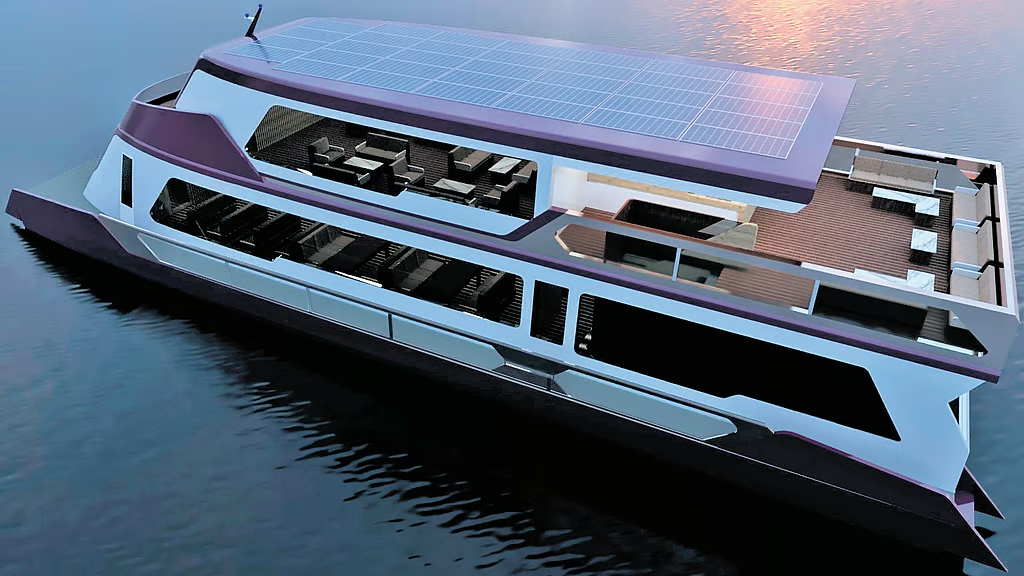
Navalt, a Kochi-based startup and the country’s largest solar electric boat manufacturer, is set to deliver two 100-tonne capacity roll-on/roll-off (Ro-Ro) vessels to the State Water Transport Department (SWTD) later this year, marking a significant step in the evolution of sustainable inland water transport in Kerala.
According to Sandith Thandasherry, the high-speed Ro-Ro vessels are currently under construction and are expected to be launched within the next six months. Designed for operational efficiency, each vessel will be capable of carrying either four 40-foot container trucks or up to 30 cars per trip. Final deployment routes and operational details will be determined by SWTD authorities.
These vessels represent Navalt’s entry into a new generation of electric maritime solutions. Fully solar-powered, the Ro-Ros are part of the company’s broader strategy to expand beyond its core focus on inland ferries and slow-speed vessels into more demanding segments, including coastal and high-speed marine transport.
“While we began with public transport ferries and inland vessels, we are now scaling into sea-going and faster vessels operating at speeds of up to 15 knots,” Thandasherry said. “Our goal is to bring electric propulsion into real-world marine conditions.”
Navalt is also developing advanced hydrofoil-based vessels capable of reaching speeds of up to 35 knots. By leveraging hydrofoil technology to reduce drag, these vessels aim to deliver high-speed transport with significantly improved energy efficiency.
The company’s diversification strategy extends to larger and more energy-intensive vessel categories, including electric tugs, where the potential for fuel savings and emissions reduction is substantial.
Since its inception, Navalt has manufactured over 80 vessels deployed across 11 Indian states, with exports to countries including Canada, Israel, the Maldives, and Seychelles. Its track record, Thandasherry noted, demonstrates that solar electric boats are not only environmentally sustainable but also economically viable.
He emphasized the importance of domestic innovation and manufacturing in achieving cost efficiency and strategic capability. “Electric marine economics work best when technology is designed and built in India,” he said.
With multiple large-scale projects in the pipeline, Navalt is positioning itself at the forefront of the global transition toward clean and efficient maritime transport, as it moves from proving the viability of solar ferries to building the next generation of electric vessels across diverse marine applications.