
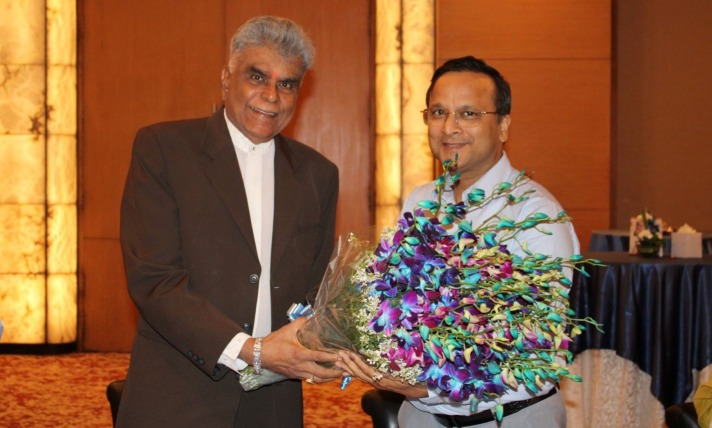
The Apparel Export Promotion Council (AEPC) hosted a high-level roundtable on Evolving Global Trade, bringing together policymakers, global buyers, and industry leaders to outline a strategic roadmap for achieving India’s ambitious $40 billion apparel export target by 2030.
Chairing the session, Dr. A. Sakthivel urged exporters to capitalise on India’s expanding network of Free Trade Agreements (FTAs), which collectively cover nearly 60% of the global population. He emphasized the need for the industry to scale up production capacity, enhance product quality, and ensure timely delivery to remain competitive in global markets.
Lav Agarwal, Director General of Foreign Trade, described FTAs as a “game-changer” for the sector. He highlighted three key priorities to drive export growth: scaling manufacturing capabilities, building a strong “Brand India” presence globally, and strengthening collaboration among stakeholders.
Echoing this sentiment, Manisha Chatterjee, Joint Secretary, stressed the importance of deeper industry collaboration, particularly in the man-made fibre (MMF) segment and sustainability initiatives. She noted that global buyers are increasingly demanding higher standards in quality, compliance, and environmentally responsible production.
Industry representatives and international buyers at the roundtable underscored several critical focus areas, including expanding MMF capacity, enhancing workforce skills, building agile and resilient supply chains, and improving access to financing and compliance frameworks.
The roundtable concluded with a strong consensus: while India has a significant opportunity to strengthen its position as a reliable global sourcing hub, achieving the $40 billion milestone will require coordinated efforts across government bodies, exporters, and global partners.