
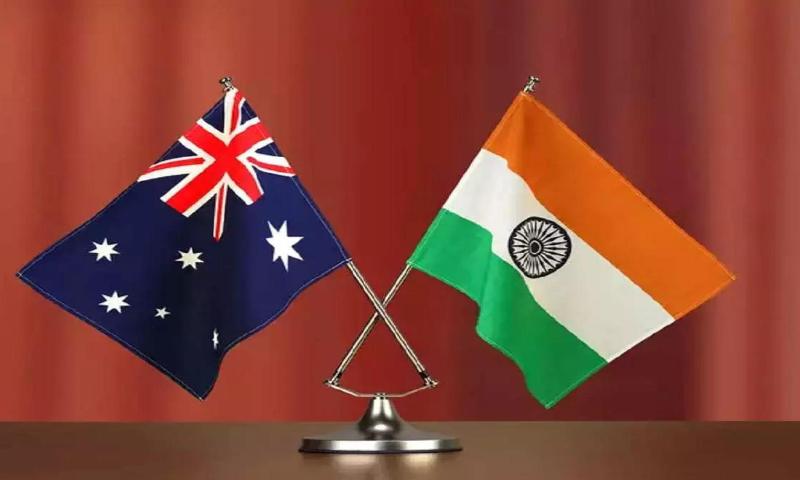
The Australia-India bilateral is one of the most important and rapidly evolving partnerships in the Indo-Pacific region. The momentum is undeniable, with the 10th round of negotiations for a Comprehensive Economic Cooperation Agreement recently wrapped up in Sydney.
Just last month, the defence ministers from both countries agreed to deepen cooperation in defence. To strengthen this partnership, both countries must extend their growing economic and defence ties to the strategically important northeast Indian Ocean region — encompassing the Bay of Bengal and Andaman Sea. Combining Australian and Indian efforts could shape the future of regional stability and global trade.
An unexplored but critical area of cooperation lies in port development in the northeast Indian Ocean. This maritime zone connects key sea lanes of communication and is home to several important port facilities, including in Sri Lanka, Bangladesh, and Thailand. For India, this region is central to Narendra Modi’s strategic plans the region for bolstering maritime security and port infrastructure, consolidated in the 2015 policy called Security and Growth for All in the Region.
For Australia, deeper engagement in this region aligns with its broader Indo-Pacific strategy and the importance of the region has been highlighted in the 2023 Defence Strategic Review and this year’s National Defence Strategy. Australia-India cooperation on port development presents an opportunity for the implementation of both these policies.
The Indian Ocean has seen an uptick in geostrategic competition, largely due to China’s expanding footprint in critical infrastructure investments as part of its Belt and Road Initiative. Beijing’s port projects such as Hambantota port in Sri Lanka, the Kyaukpyu port in Myanmar, and the proposed Kra Canal in Thailand, have sparked debates over their economic viability and strategic intent, with some critics labelling them white elephants — large, costly, and underutilised infrastructures that serve more strategic than economic purposes.
In comparison, port development initiatives by other regional players, including India and Australia, have been more modest. It’s only recently that the US Development Finance Corporation committed $553 million to the development of a container terminal at Colombo port. Japan has been building Bangladesh’s first deep sea port at Matarbari. Australia, despite its growing expertise in ports, has missed opportunities in port development in the region. The Department of Foreign Affairs and Trade’s (DFAT) South Asia Regional Infrastructure Connectivity (SARIC) program, which contributes $35 million towards infrastructure connectivity in the region, is a step in the right direction but still falls short of the scale required to counterbalance China’s influence and meet Australia’s strategic and economic objectives.
Leveraging Australia and India’s expertise for regional port development
It is not widely known domestically but Australia possesses significant expertise in port development, particularly in automation and environmental sustainability. This expertise will be instrumental in modernising ports across the northeast Indian Ocean. Ports like Brisbane, Sydney, and Victoria are at the forefront of automation technology, leading to enhanced capacity and operational cost savings during a time of increasing fiscal austerity. These advancements could be of immense value to ports in the Indian Ocean, many of which still rely on outdated technologies and processes.
Moreover, Australia’s progress in green ports, including the development of green hydrogen hubs, offers a unique opportunity for collaboration in the environmental sustainability of port operations. Introduced in 2023 by the Department of Infrastructure, Australia’s Maritime Emissions Reduction National Action Plan serves as a model for reducing carbon footprints in maritime activities. By supporting countries in the Indian Ocean develop and implement their own maritime emissions reduction strategies, Australia can contribute to the global effort to combat climate change.
One of the most tangible areas of Australia-India cooperation is their shared success in achieving 100% implementation of the Trade Facilitation Agreement (TFA). This reflects both nations’ commitment to streamlining port processes, reducing trade barriers, and enhancing the efficiency of cross-border trade. However, in the Indian Ocean, countries like Bangladesh and Sri Lanka lag behind, with TFA implementation rates hovering around 70% and 40%, respectively. By leveraging these low-hanging fruits for strategic engagement, Australia and India can significantly enhance their roles in the region.
Economically, collaboration in port development could open new markets for Australian technology and services, providing a boost to its export sector. Geostrategically, it would position Australia as a key partner in the Indian Ocean region. For New Delhi, this would strengthen its leadership role in the Indian Ocean. Together, these efforts make the partnership a cornerstone of regional development and security, offering a win-win scenario for both countries.
About the author

By Riya Sinha
Riya Sinha is a Maitri fellow, at the Economic Security, United States Studies Centre at the University of Sydney, and an associate fellow at the Centre for Social and Economic Progress, New Delhi.