
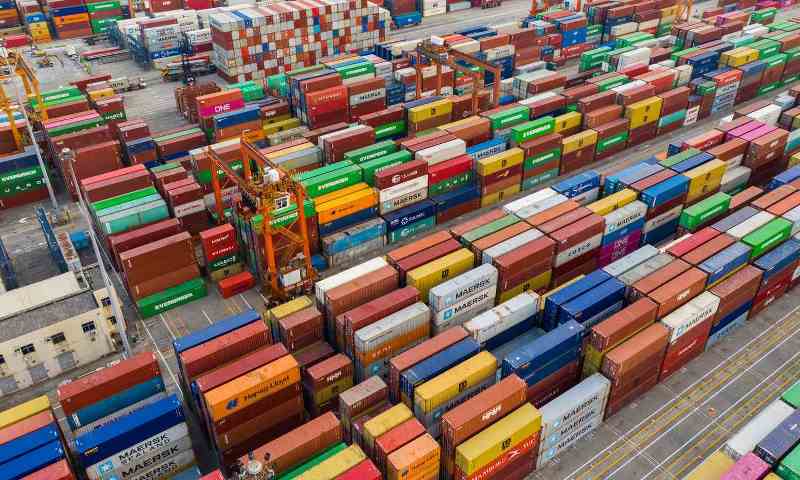
India’s ceramic exporters are facing mounting losses after the disruption in the Strait of Hormuz left nearly 1,500 containers of ceramic products stranded at ports or in transit, triggering steep war risk surcharges, demurrage charges and uncertainty over deliveries.
The containers—largely carrying wall tiles, floor tiles, vitrified tiles and sanitaryware—are bound for West Asian markets and are currently stuck either at Mundra Port in Gujarat or at ports across the Gulf region, according to industry sources. Each container holds ceramic products worth approximately ₹4–4.5 lakh, significantly raising the financial exposure for exporters.
Industry representatives say the sudden imposition of war risk surcharges by shipping lines, ranging between $4,000 and $5,000 per container, has severely disrupted the trade. The surcharge comes on top of regular freight costs, which typically range between $300 and $600 per container.
According to Nilesh Jetpariya, Chairman of the Ceramics Panel at the Chemical and Allied Products Export Promotion Council (CAPEXIL), the surcharge has effectively wiped out exporter margins.
“The biggest challenge at the moment is that there are 1,500 containers already loaded for Gulf countries and other destinations affected by the war. They are either lying at Indian ports, on ships in transit, or at ports in those countries,” Jetpariya said.
He explained that the average profit per container is about $300, which is far lower than the newly imposed war risk surcharge. “This doubles the price of the product. If the buyer refuses to accept delivery at this rate, exporters will have to bear not only the surcharge but also the cost of bringing the cargo back,” he added.
Exporters sending multiple containers face particularly severe financial exposure. For instance, a shipment of 50 containers represents more than ₹2 crore worth of goods, placing enormous strain on exporters if deliveries are cancelled.
India’s ceramic industry is valued at around ₹75,000 crore, with Morbi in Gujarat accounting for nearly 90% of the country’s production. Ceramic exports from India stand at approximately ₹21,000 crore annually, of which Gulf Cooperation Council (GCC) countries and nearby markets account for about ₹6,000 crore—roughly 25% of total exports.
Apart from shipping surcharges, exporters are also grappling with demurrage charges, as containers already loaded for West Asian destinations remain stranded at ports.
In response to the crisis, the Ministry of Ports, Shipping and Waterways issued a notification on March 6, directing major ports to implement Standard Operating Procedures (SOPs) aimed at easing trade disruptions caused by the West Asia conflict. The measures include allowing cargo bound for West Asia to be stored as transshipment cargo, allocating additional storage areas, facilitating ad-hoc vessel calls, enabling the “back-to-town” movement of cargo, and prioritising perishable shipments and returning export cargo.
Ports have also been advised to consider requests for reduction, waiver, or remission of port charges on a case-by-case basis, depending on prevailing conditions.
Separately, the Central Board of Indirect Taxes and Customs (CBIC) issued guidelines on March 8 outlining procedures for the return of export cargo from international waters due to the closure of the Strait of Hormuz, under Section 143AA of the Customs Act. Under these provisions, vessels carrying such cargo will generally be required to berth at the same Indian port from which they originally departed, except in cases involving transshipment.
While the government measures are expected to provide some operational relief, industry leaders remain concerned about the longer-term impact.
“With the conflict continuing and no clear timeline for reopening the route, orders from Gulf countries are already being put on hold,” Jetpariya said, warning that prolonged disruption could significantly affect India’s ceramic export momentum in one of its key markets.