
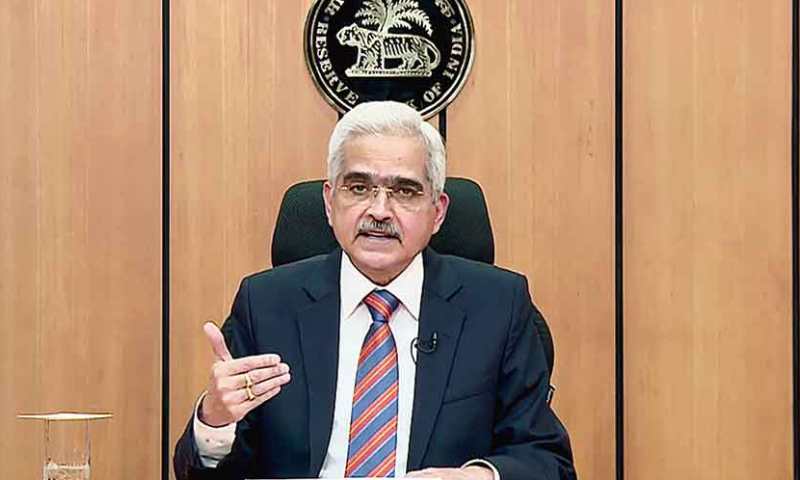
Amid mounting global tariff uncertainties, Principal Secretary to the Prime Minister Shaktikanta Das struck a confident and optimistic note on Friday, asserting that India’s strategic policy framework has placed the economy on a strong and resilient growth trajectory.
Speaking at the inaugural Bibek Debroy Memorial Lecture, Das said India is at a defining moment in its economic evolution. “India stands today at the cusp of a historic journey – from being an incredible India to a credible India,” he remarked, acknowledging that while challenges remain, the country has repeatedly demonstrated its ability to withstand global shocks.
Referring to the turbulent years since the COVID-19 pandemic, Das noted that India had successfully navigated what appeared to be “perfect storms” arising from multiple global disruptions. “With the policies that the country has adopted, the wind is in our sails,” he said, adding that India is firmly on the path to Viksit Bharat.
Tariff concerns loom
Das’s remarks assume significance as the United States considers a Trump-backed legislative proposal that could impose tariffs of up to 500 per cent on countries importing Russian crude oil. This poses a potential risk for India, which continues to purchase Russian oil despite existing duties of up to 50 per cent.
However, domestic economic sentiment remains robust, buoyed by the Ministry of Statistics’ projection of 7.4 per cent GDP growth for FY26, making India the fastest-growing major economy globally.
Strategic autonomy at the core
Emphasising India’s independent approach to global engagement, Das said the country supports a rules-based international order while firmly safeguarding its sovereignty. “We are proactively forging partnerships and strategies to secure our national interest in a world where power is more diffused,” he said, while also calling for revitalisation of the multilateral system amid evolving geopolitical alignments.
Multi-cylinder growth engine
Looking ahead, Das highlighted India’s “multi-cylinder” growth model, driven by a young, digitally empowered workforce and world-class infrastructure. He envisioned an India a decade from now marked by seamless digital transactions, greater economic formalisation, and Indian-led innovations in areas such as artificial intelligence, healthcare, and space technology.
“This is a picture of an economy speeding ahead on multiple cylinders,” he said.
Fiscal discipline underpins stability
Das also underlined India’s commitment to fiscal prudence as a key source of macroeconomic stability. The Centre’s gross fiscal deficit has narrowed sharply from 9.2 per cent in 2020–21 to 4.8 per cent in 2024–25, while the general government’s debt-to-GDP ratio has declined from a pandemic peak of 88.4 per cent to 81.6 per cent. According to IMF projections, this ratio is expected to fall further to 76.9 per cent by 2030–31.
“This commitment to fiscal prudence is restoring headroom for future counter-cyclical policies and keeping public debt levels sustainable,” Das concluded.