
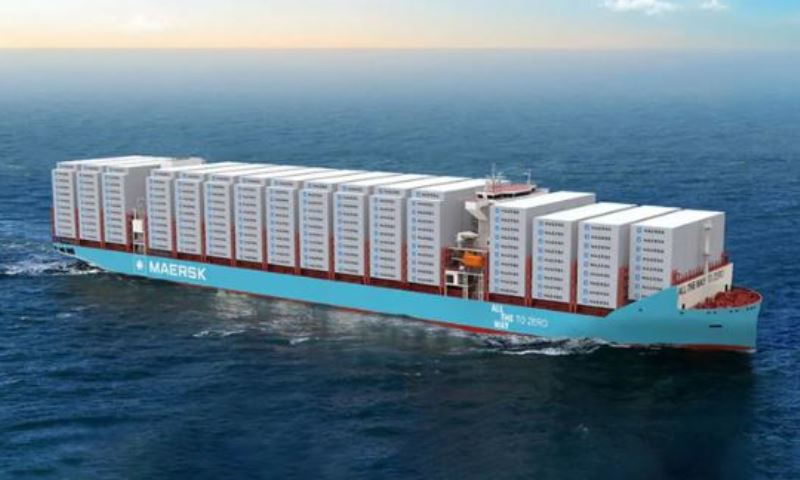
Danish shipping giant Maersk, a bellwether for global trade, said Thursday its net profit surged sixfold in the first quarter and maintained its full-year earnings outlook despite US President Donald Trump’s tariffs onslaught.
Maersk said its profit after tax reached $1.2 billion between January and March – before Trump’s sweeping tariffs on imports took effect in April.
Revenue rose 7.8 per cent to $13.2 billion on the back of higher freight prices.
‘With trade tensions flaring up and uncertainty on the rise, global supply chains are once again in the spotlight,’ said Maersk chief executive Vincent Clerc.
The company said global container growth is expected to remain positive in the second quarter, especially if shippers seize on a 90-day pause of Trump’s higher tariffs on dozens of countries.
‘In the latter part of the year, there is, on the one hand, a growing risk that demand could contract, and on the other the possibility that trade rebounds if tariffs are rolled back,’ the company added.
Trump imposed a ‘baseline’ 10 percent tariff on imports from around the world in April, along with sector-specific levies on cars, steel and aluminium.
But he delayed stiffer duties on trade partners including the European Union and Japan until July, giving countries a chance to negotiate deals.