
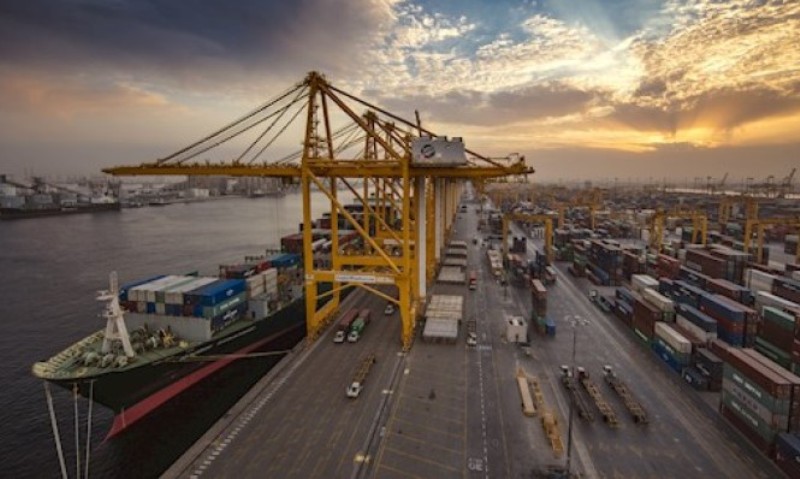
Port operations across the Gulf region were disrupted over the weekend following a series of aerial and missile strikes that damaged vessels at sea and triggered a fire at one of the berths of Jebel Ali Port.
Authorities in Dubai confirmed that a fire broke out at the port after debris from an aerial interception struck part of the facility. Smoke continued to be visible from within the port precinct on Sunday afternoon. Operations at Jebel Ali have since been suspended, with all activities currently halted.
The escalation also saw at least three vessels impacted in regional waters.
One crew member was killed when the Marshall Islands-flagged crude tanker MKD Vyom (IMO: 9284386) was struck by a projectile off the coast of Oman on Sunday. The fully laden tanker, chartered by Mercuria, suffered an explosion and subsequent fire following the strike.
In a separate incident, the sanctioned tanker Skylight (IMO: 9330020) was hit by a missile approximately five nautical miles north of Khasab Port, within Omani territorial waters. The vessel, previously flagged by Palau and reportedly stateless, had been anchored since February 22 and was not transiting the Strait of Hormuz at the time.
Four of the 20 crew members onboard sustained injuries of varying severity and were evacuated for medical treatment by Omani authorities. The tanker remains on fire.
Security analysts noted that because the vessel was anchored rather than in transit, the incident may not necessarily signal a coordinated attempt to disrupt commercial navigation through the Strait of Hormuz. However, the location near the Musandam Peninsula — which directly overlooks one of the world’s most critical energy chokepoints — heightens regional security concerns amid ongoing tensions involving Iran, Israel and the United States.
A third oil-bunkering tanker was also reportedly damaged off the UAE coast, according to shipping sources, though independent confirmation remains pending.
Regional Port Status
Port operations across the Gulf are currently mixed, with several facilities suspending or scaling back services:
-
UAE: Jebel Ali remains suspended. While ports in Sharjah and Khor Fakkan Port continue to operate, Ruwais Port has moved to ISPS Level 2, indicating a heightened security threat.
-
Bahrain: All ports, including pilotage services, have been temporarily suspended.
-
Kuwait: Security levels have been increased, though ports remain open as of Sunday morning.
-
Qatar: Ras Laffan Port and Mesaieed Port remain operational but are handling reduced traffic amid reports of GPS signal interference. Qatari authorities have closed national airspace.
-
Oman: The port of Duqm Port and Asyad Dry Dock have suspended operations.
Unconfirmed reports suggested that certain facilities were being evacuated as a precautionary measure.
Meanwhile, the UK Defence Secretary John Healey stated in a BBC interview that British military personnel at a base in Bahrain had been within several hundred yards of a retaliatory missile and drone strike on Saturday. He also claimed that two missiles were fired in the direction of Cyprus.
However, Cyprus Defence Minister Vassilis Palmas refuted claims that Cyprus had been targeted, stating there was no indication of any threat to the country.
The incidents underscore growing volatility in the Gulf region, raising fresh concerns for maritime trade flows, tanker movements and energy security through the Strait of Hormuz — a corridor that handles a significant share of the world’s crude oil exports.