
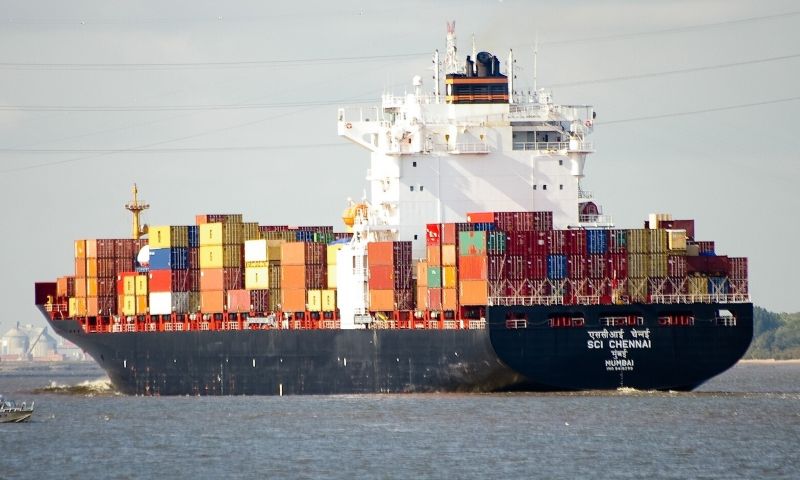
State-owned Shipping Corporation of India Ltd (SCI) has placed an order for India’s first methanol-powered dual-fuel platform supply vessel (PSV) with Mazagon Dock Shipbuilders Ltd (MDL), marking a significant step in the country’s push toward green shipping. The vessel, with a capacity of 3,000 deadweight tonnes (DWT), is estimated to cost around $39 million, highlighting ongoing cost challenges within India’s domestic shipbuilding sector.
The contract, signed on March 18 and disclosed via a regulatory filing, forms part of India’s broader maritime decarbonisation strategy aligned with the National Green Hydrogen Mission. The initiative promotes the adoption of alternative fuels such as e-methanol and e-ammonia derived from green hydrogen.
Cost Pressures and Strategic Compromise
SCI had initially floated a tender for the construction of up to four PSVs—two conventional and two capable of running on alternative fuels. However, escalating cost estimates from domestic shipyards led to a scaling back of the plan.
According to sources familiar with the process, the government ultimately approved funding for only one dual-fuel vessel under the Green Hydrogen Mission, prompting SCI to drop plans for the conventional units and reduce the number of alternative-fuel vessels.
“The cost quoted by Indian yards at this stage is high, so a commercial compromise was necessary while keeping long-term strategic goals in mind,” a source said.
Mazagon Dock Shipbuilders emerged as the lowest bidder, though industry observers note that layered subcontracting practices—where work is passed through multiple vendors—may be contributing to inflated costs.
Technology Choices and Fuel Uncertainty
SCI has opted for high-pressure methanol injection technology for the vessel. While this approach involves higher capital expenditure, it reduces reliance on conventional pilot fuels compared to low-pressure systems, improving the vessel’s green credentials.
However, industry experts caution that operational challenges remain, particularly around the availability and pricing of e-methanol. Uncertainty in fuel supply chains could impact the extent to which such vessels can operate on cleaner fuels.
“It’s a trade-off. The availability and cost of e-methanol remain unclear, making it difficult to ensure consistent usage,” an industry source noted.
Supporting Offshore Operations and Green Transition
Platform supply vessels are critical assets in offshore oil and gas logistics, supporting exploration and production activities by transporting equipment, supplies, and personnel to offshore installations.
This order underscores India’s dual objective of strengthening domestic shipbuilding capabilities while accelerating the transition to low-emission maritime operations. However, the relatively high cost of construction signals that competitiveness will remain a key concern as India positions itself as an alternative global shipbuilding hub.