
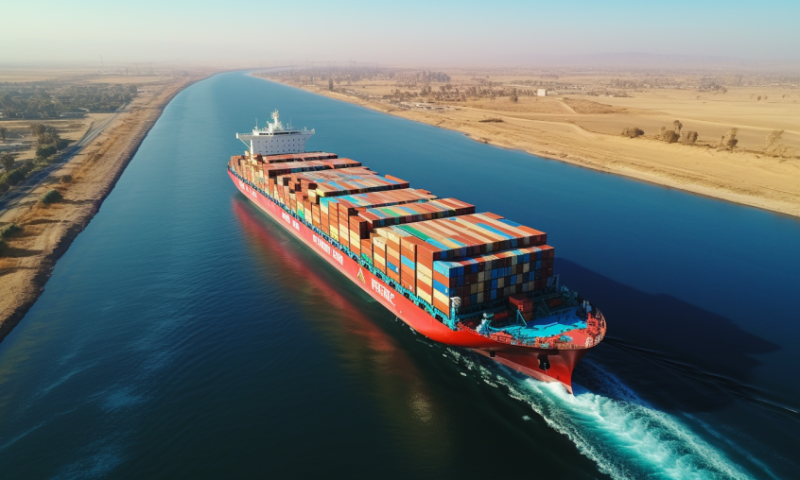
Global freight markets are closely monitoring developments around the Suez Canal as any sustained return of container traffic through the Red Sea could significantly reshape shipping dynamics, according to logistics major DHL.
In its latest market outlook, DHL said the canal’s gradual reopening to commercial shipping remains a key swing factor for ocean freight in 2026. A wider resumption of Suez transits could ease pressure on vessel capacity, shorten sailing times, and weigh on freight rates that have been supported by longer routings around the Cape of Good Hope.
Since late 2023, attacks on merchant shipping in the Red Sea forced most major carriers to avoid the Suez Canal, diverting vessels around southern Africa. These diversions added up to two weeks to transit times, absorbed capacity, increased fuel consumption, and pushed freight rates higher across major east–west trades.
DHL noted that recent security improvements have prompted some carriers to test a return to the corridor, but the recovery remains uneven. While selective services have resumed Suez transits, most liners continue to adopt a cautious approach, balancing cost savings against security risks, insurance premiums, and crew safety concerns.
The forwarder said the pace at which shipping lines normalise Suez operations will be critical for market fundamentals. A faster-than-expected return could accelerate a freight rate downcycle, particularly on Asia–Europe routes, as effective capacity increases and congestion-related buffers unwind.
However, DHL warned that volatility is likely to persist. Diverging strategies among carriers, shifting geopolitical risks, and uncertain demand growth mean that shippers should continue to expect fluctuating rates and variable transit times through 2026.
“The Suez Canal remains a key pressure point for global supply chains,” DHL said, adding that any sustained change in traffic flows through the region would have an outsized impact on freight markets worldwide.