
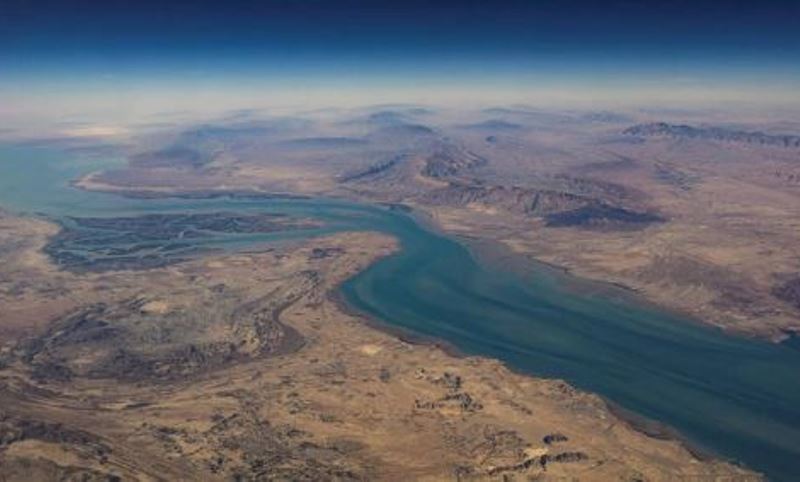
Iran on Thursday issued fresh maritime guidance directing vessels to use alternative routes while transiting the strategically critical Strait of Hormuz, citing risks posed by potential sea mines in the main navigation channel.
The advisory, released by the Islamic Revolutionary Guard Corps (IRGC), comes shortly after Tehran agreed to temporarily reopen the vital waterway under a two-week ceasefire arrangement with the United States.
“All ships intending to transit the Strait of Hormuz are hereby notified… to take alternative routes… to ensure maritime safety and avoid possible collisions with sea mines,” the IRGC said in a statement carried by local media. Specific entry and exit coordinates for the alternate passages were also shared with shipping operators.
The Strait of Hormuz, a narrow maritime corridor linking the Persian Gulf with the Arabian Sea, handles nearly one-fifth of the world’s oil trade. Its disruption since early March—amid escalating tensions—has sent global energy markets into turmoil.
The reopening follows a fragile truce brokered between Tehran and Washington, announced just hours before a deadline set by Donald Trump, who had warned of severe consequences if Iran failed to restore navigation through the strait.
Despite the reopening, the continued threat of naval mines underscores the volatility in the region, forcing shipping companies to reassess routes, insurance costs, and operational risks.
Industry experts caution that while alternative routing may reduce immediate dangers, it could lead to congestion and delays, further straining global supply chains already impacted by the prolonged disruption.
The situation remains fluid, with maritime authorities and naval forces closely monitoring vessel movements through one of the world’s most critical energy chokepoints.