
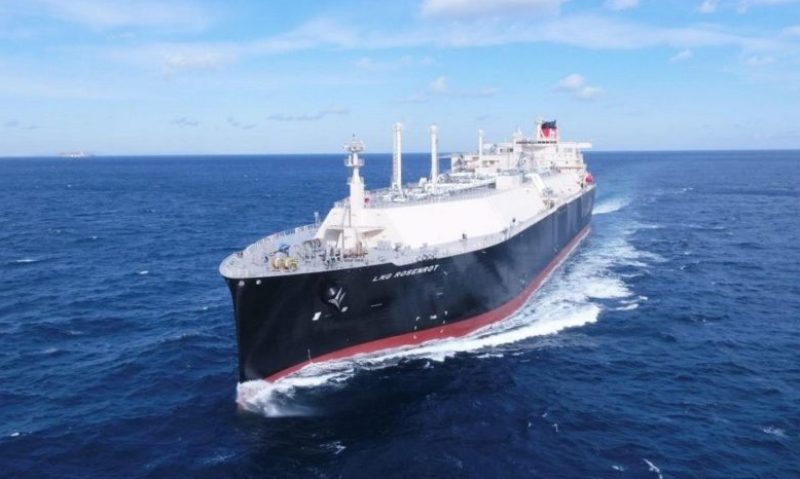
A joint venture between state-owned Oil and Natural Gas Corporation Ltd (ONGC) and Japan’s Mitsui O.S.K. Lines, Ltd (MOL) has selected South Korea’s Samsung Heavy Industries Co., Ltd to construct two very large ethane carriers (VLECs) in a deal valued at around $370 million, according to multiple sources.
The shipbuilding contract is scheduled to be signed on Tuesday on the sidelines of India Energy Week in Goa, a government official and one of the sources said.
The ONGC–MOL consortium had issued an enquiry for the construction of two VLECs, with Samsung Heavy Industries emerging as the successful bidder. A decision on building a third VLEC will be taken at a later stage, the official added.
Samsung Heavy Industries is one of South Korea’s “Big Three” shipbuilders and among the world’s largest yards. An industry executive said the company has the strongest global track record in the design and construction of very large ethane carriers, citing its extensive experience with dedicated ethane cargo containment systems—an improved version of the GTT Mark III technology. Mitsui O.S.K. Lines has previously built VLECs, very large gas carriers (VLGCs) and liquefied natural gas (LNG) carriers at Samsung, the executive noted.
The two vessels will be owned and operated by separate special purpose vehicles (SPVs) to be set up in Gujarat International Finance Tec-City (GIFT City), with ONGC and MOL each holding a 50% stake.
The VLECs will transport ethane to ONGC Petroadditions Ltd’s (OPaL) petrochemical complex at Dahej in Gujarat. OPaL is a subsidiary of ONGC.
Under the plan, ONGC will source and supply around 800 kilo tonnes per annum (KTPA) of ethane from the United States—the world’s largest ethane market—to ensure long-term feedstock security for OPaL’s dual-feed cracker plant. The facility is designed to operate on a mix of naphtha and C2 (ethane), C3 (propane) and C4 (butane), with ethane imports scheduled to begin from May 2028.
The project marks a significant step in strengthening India’s petrochemical supply chain and reflects growing collaboration between Indian, Japanese and South Korean companies in specialised gas shipping and energy infrastructure.