
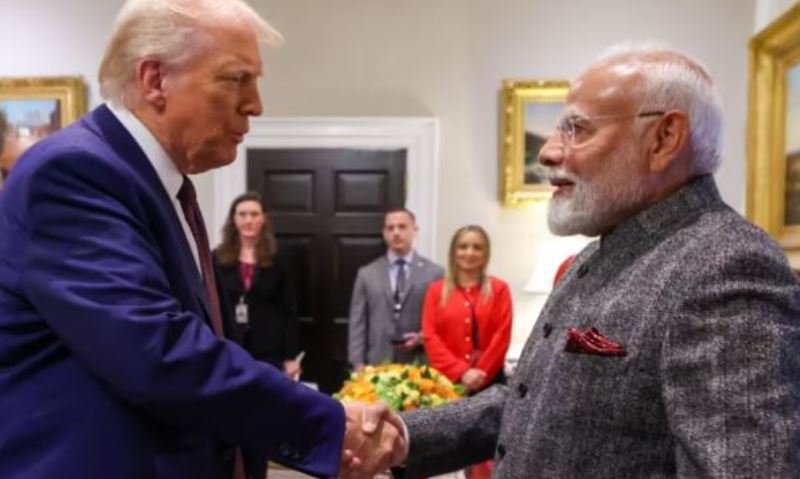
The United States and India have agreed to a new bilateral trade deal that will reduce reciprocal tariffs on Indian goods from 25% to 18%, U.S. President Donald Trump announced on Monday following discussions with Indian Prime Minister Narendra Modi.
In a statement on social media platform Truth Social, President Trump described the agreement as a sign of strong cooperation between the two nations and said the tariff reduction is effective immediately.
The deal follows a period of heightened trade tensions in 2025, during which Washington had imposed increased tariffs on Indian imports as part of broader reciprocal tariff policies and in response to India’s continued purchases of Russian crude. Under the new agreement , the U.S. will now cap its reciprocal tariff at 18%, a move expected to ease trade costs for Indian exporters.
As part of the broader economic cooperation, both leaders signalled commitments to expand commercial ties. Trump said India would reduce its own tariffs and non‑tariff barriers on U.S. goods — including energy, technology and agricultural products — with India pledging to purchase substantial volumes of American products.
The negotiation also reportedly touched on energy policy, with India agreeing to halt purchases of Russian oil, a shift that Washington views as aligning New Delhi more closely with Western sanctions policy.
Market analysts say the tariff cut could revive confidence in the bilateral trade relationship and benefit sectors such as textiles, pharmaceuticals, engineering goods and IT services that have been affected by higher duties. However, specifics on implementation timelines and sectoral impact remain subject to follow‑up announcements by both governments.
The agreement comes at a time when India is also concluding a major trade pact with the European Union, further signalling New Delhi’s pursuit of diversified trade partnerships.
Impact: Economists expect the tariff reduction to lower export costs, potentially boosting India’s shipments to the U.S., while expanded market access for American goods could increase bilateral imports — contributing to projected growth in two‑way trade.